
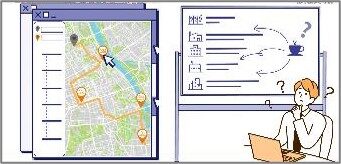
Emergency breakdowns, as the name suggests, occur unpredictably, making it impossible to pre-schedule technicians in advance. With routine operations such as periodic maintenance already in place, quickly assigning the most appropriate technician becomes extremely challenging.
In many companies, dispatch operations are still handled manually by dedicated dispatchers. In this article, we examine how the use of CSOne’s AI-powered automatic dispatch function can significantly improve operational efficiency.
Step1) Service Inquiry / Case Creation
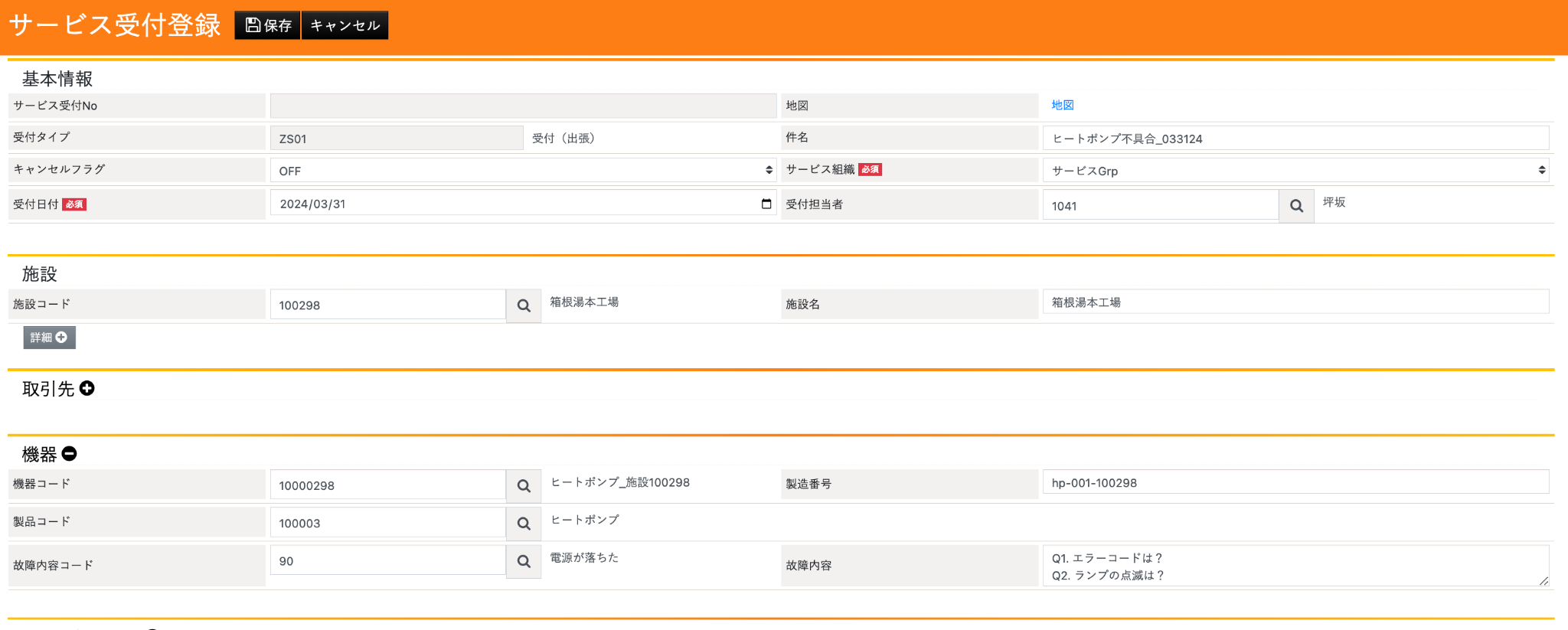
First, the emergency breakdown must be registered in the system.In this scenario, we assume that a customer reported a heat pump malfunction on Friday, March 29, and the customer’s factory is located in Hakone-Yumoto.
Step2) Execute Automatic Dispatch
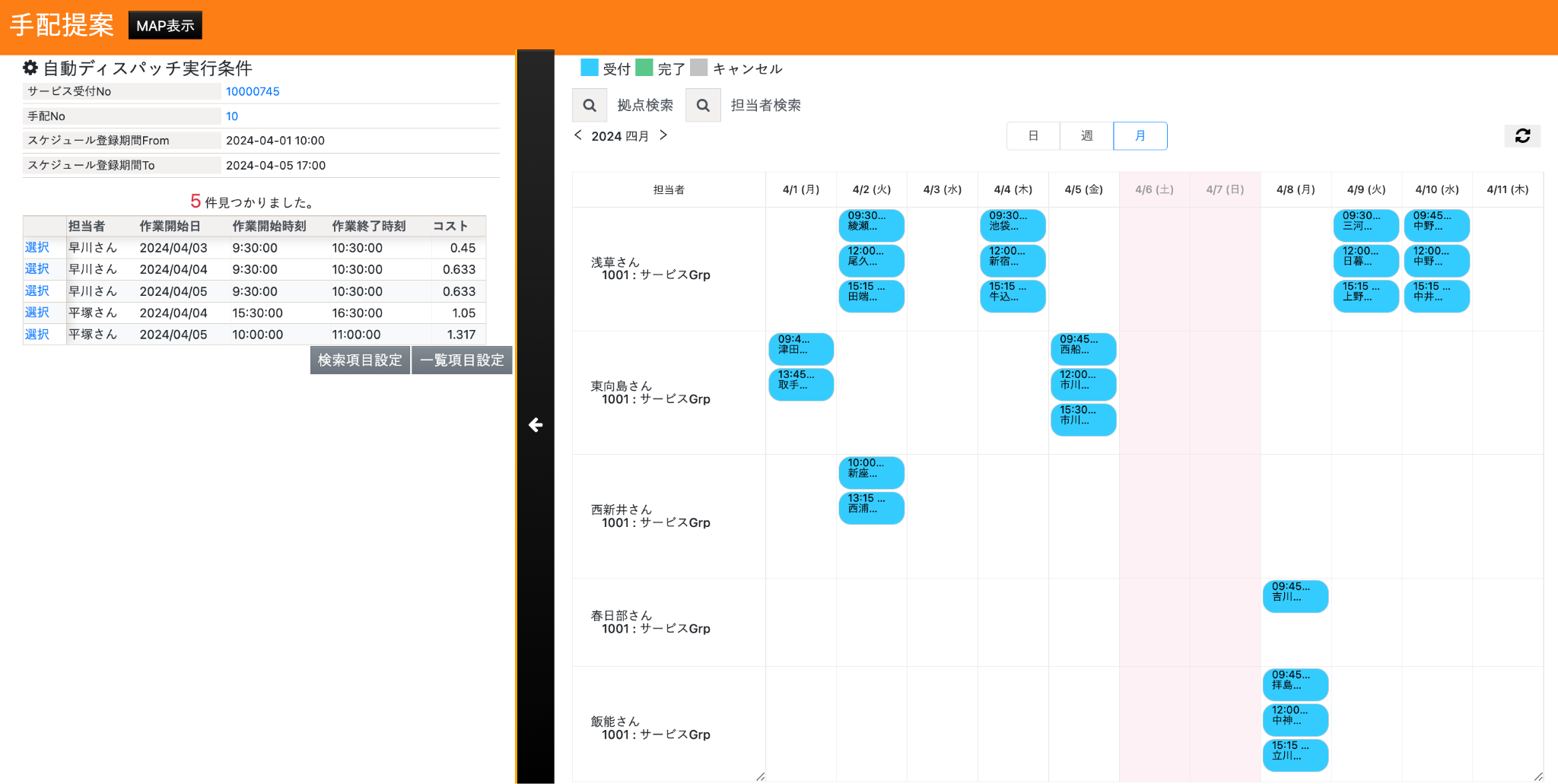
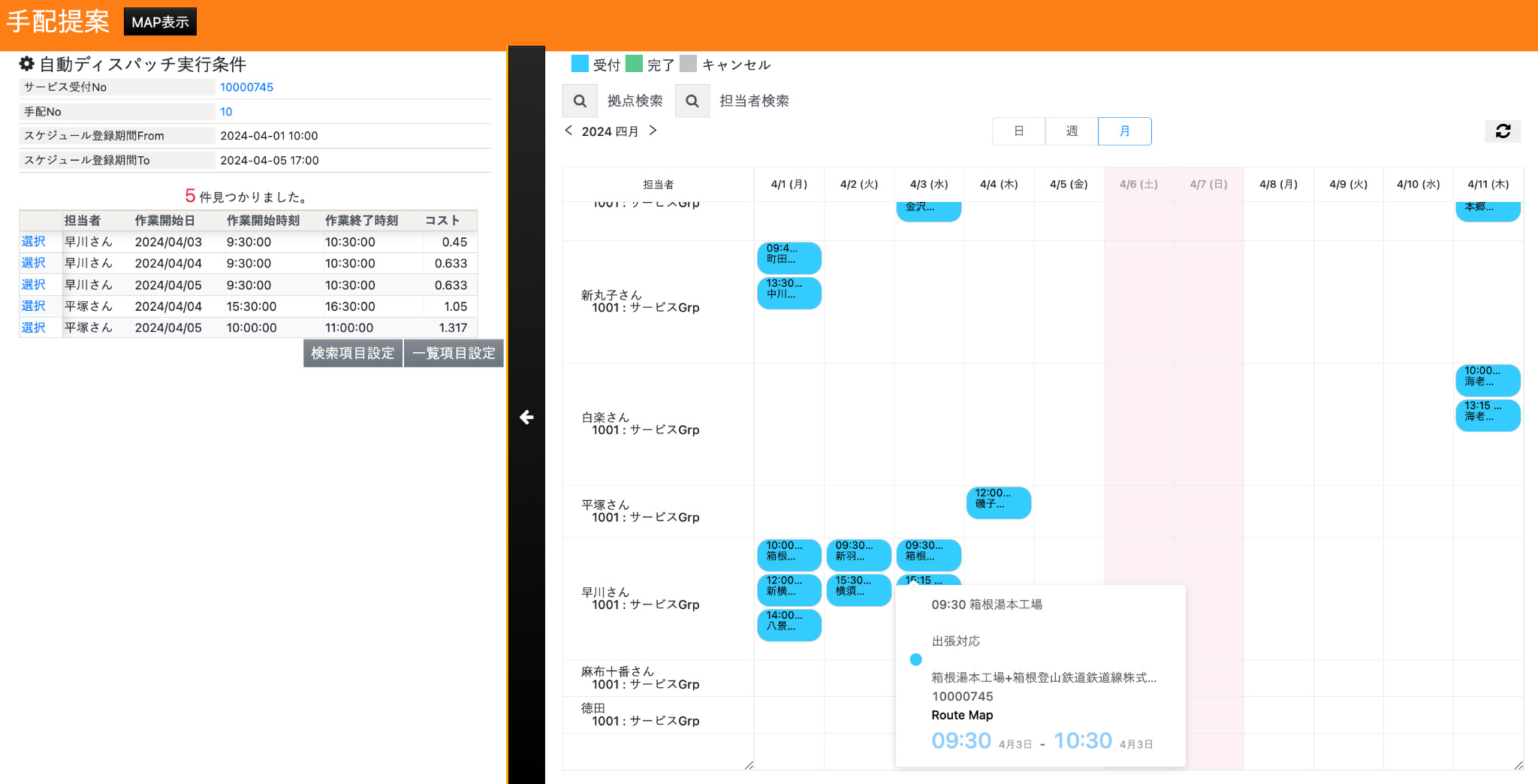
Once the case has been registered in the system, we proceed to run the automatic dispatch. In this scenario, the inquiry is received on Friday, March 29, and the dispatch is executed under the condition that the response must be completed within five business days, between Monday, April 1 and Friday, April 5.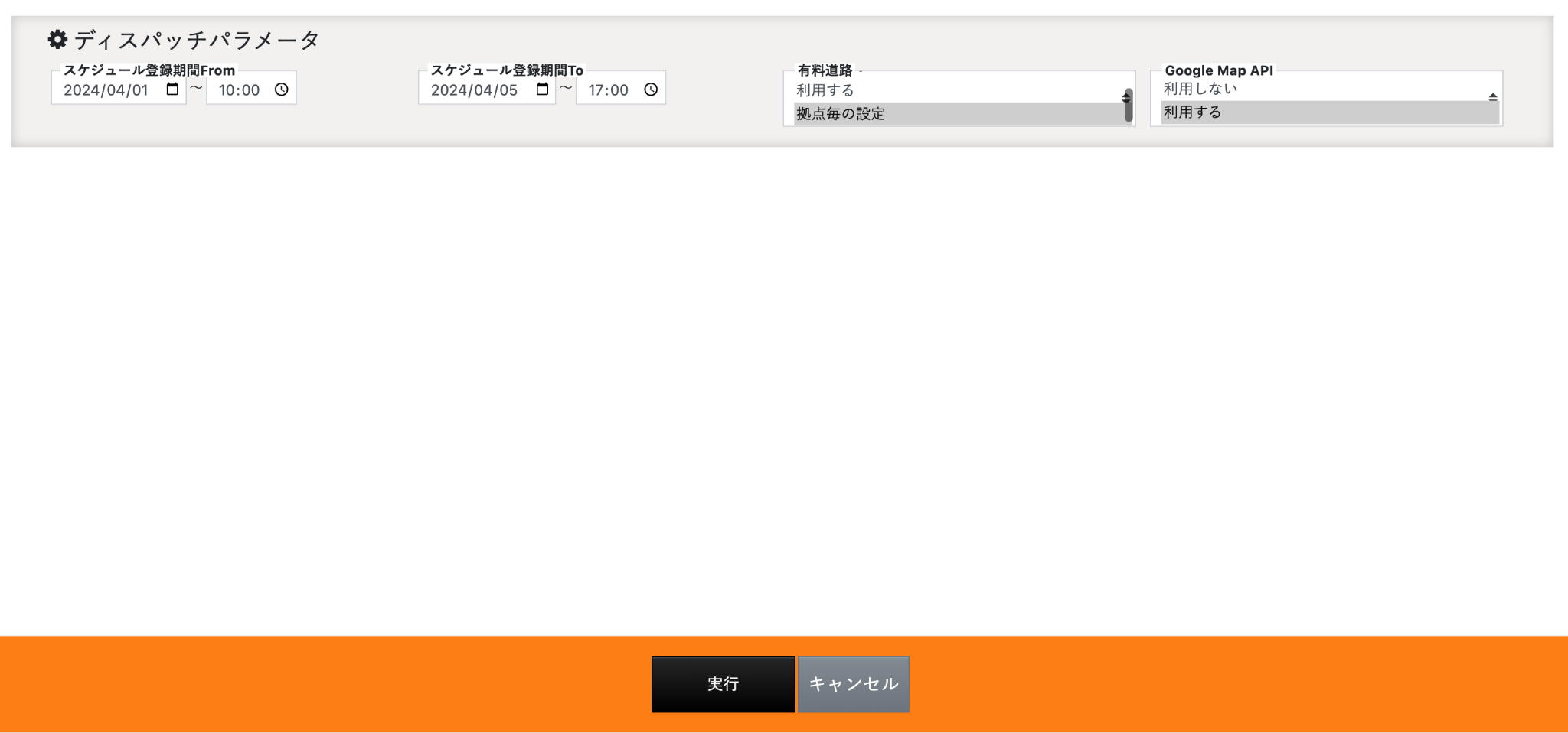 The dispatch results are displayed as follows. The calendar on the right shows each technician’s existing schedule, including previously assigned tasks such as periodic maintenance. Meanwhile, on the left side, the AI presents optimized dispatch proposals, taking into account factors such as technician availability, travel distance, and travel time, and determines which technician can most efficiently travel to the Hakone-Yumoto factory. In this case, two candidates— Hayakawa-san and Hiratsuka-san —are identified. Five options are listed in order of cost efficiency, and the system automatically suggests that the best option is for Hayakawa-san to visit on Wednesday, April 3, from 9:30 to 10:30.
 In addition, by using the MAP display feature, it is possible to visualize the travel routes for each of the five proposed options. Since the automatic dispatch function is integrated with Google Maps, simply clicking the “Display” button instantly shows each route on the map. This allows users to not only evaluate cost efficiency but also understand the actual travel routes, enabling more comprehensive comparison and decision-making.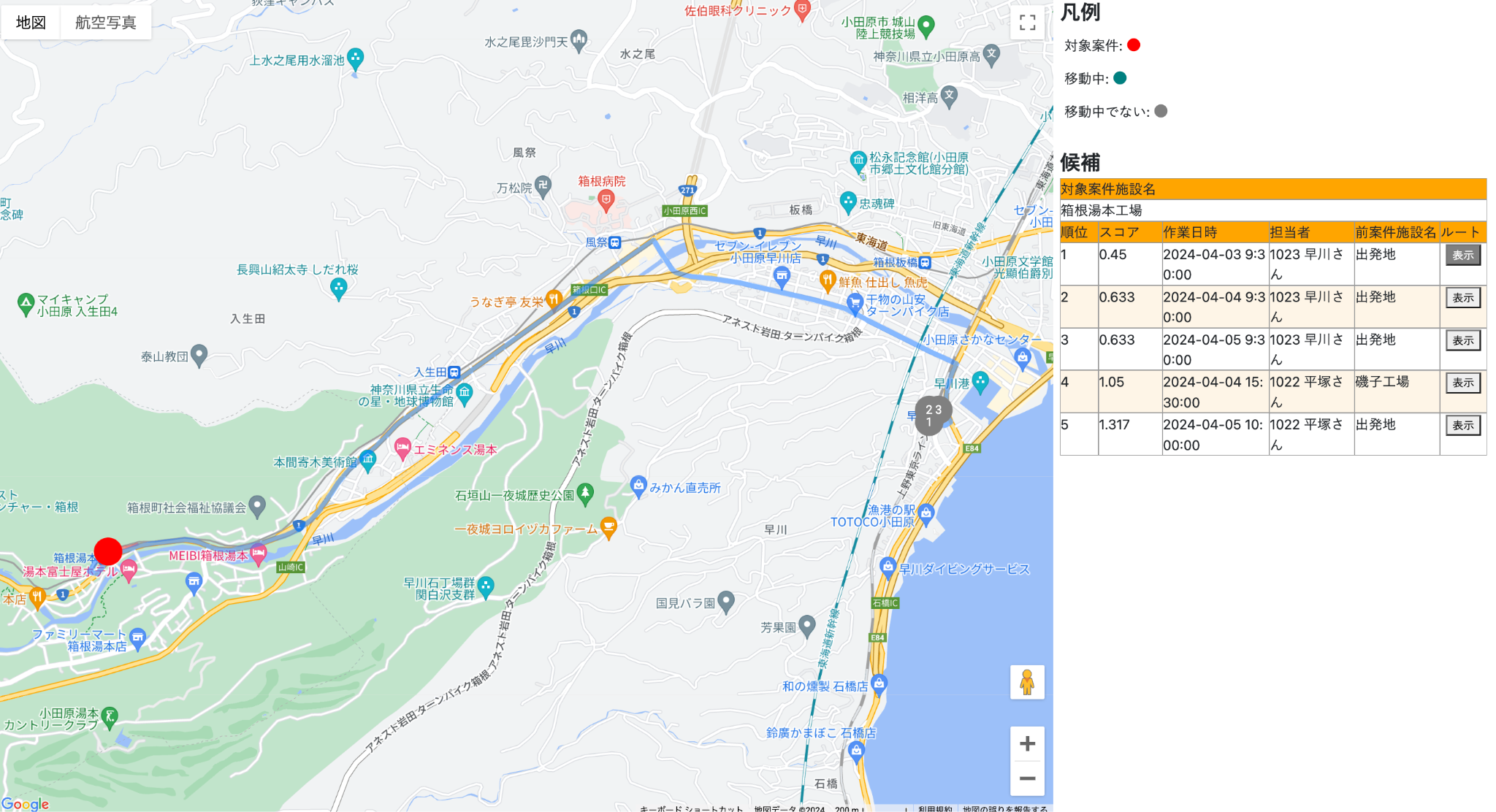
Step3) Assigning a Field Service Technician
Based on the proposal generated by the automatic dispatch, Hayakawa-san is assigned to the most efficient time slot, Wednesday, April 3, from 9:30 to 10:30. By clicking the “Select” button, the assignment is automatically reflected in the calendar on the right. Not only can the assigned technician, Hayakawa-san, immediately recognize the new schedule, but all relevant stakeholders with viewing permissions can also share and access the schedule in real time, leading to improved efficiency in internal information sharing.Additionally, manual adjustments can be made on this screen through drag-and-drop operations.
Step4) Notifying the Customer
According to dispatch operators in the field, notifying customers and coordinating schedules are also resource-intensive tasks. By using CSOne, the schedule created through automatic dispatch can be easily sent to the customer. If there are no issues, the customer can simply click “Accept” to confirm the appointment. As a result, for many customers who agree to the proposed time slots, the process from initial contact to final confirmation can be significantly shortened.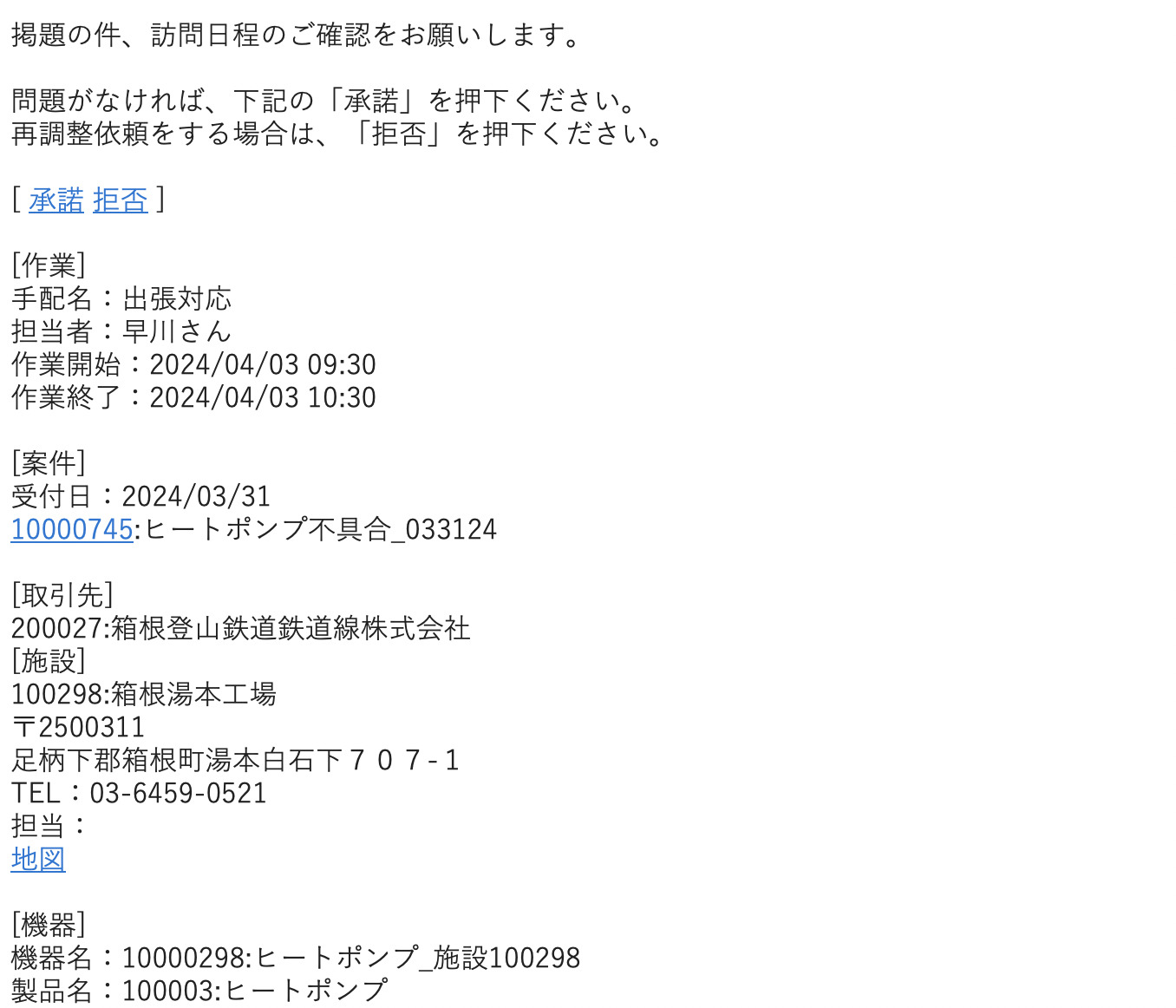
Summary
As demonstrated above, by utilizing CSOne’s automatic dispatch function, it is possible to significantly reduce the workload associated with dispatch operations.For example, when managing 2,000 service requests per month with 100 technicians, scheduling adjustments alone can require as much as 480 hours of work for dispatch personnel. However, by using CSOne’s automatic dispatch function, this workload can be reduced from 480 hours to just 2 hours—achieving approximately a 95% reduction in time and delivering a substantial improvement in productivity.
In addition, dispatch operations often rely heavily on the experience of individual staff, making them prone to becoming siloed and dependent on specific personnel. With AI-powered automatic dispatch, however, the process can be carried out by anyone, regardless of experience level—whether a new employee or a seasoned professional—which is a critical advantage.
If you are facing challenges in dispatch operations, please feel free to contact us. We will provide tailored proposals based on your specific business needs.