
Introduction
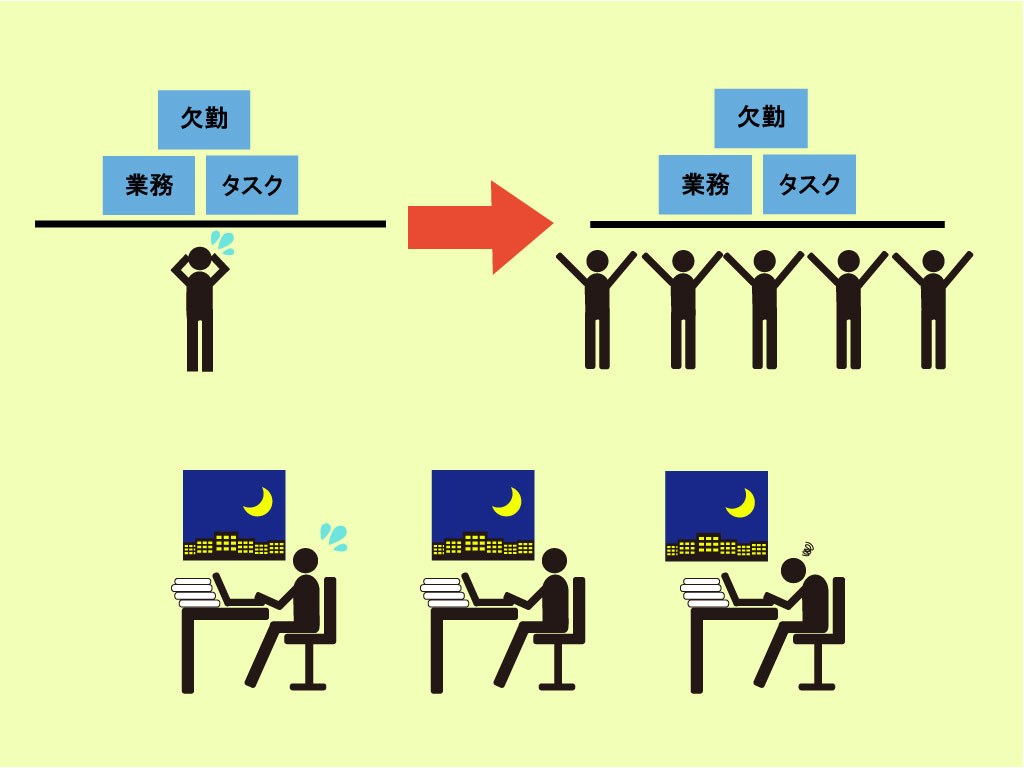
Field service operations—such as maintenance, inspections, and repairs—require on-site responses and often depend heavily on the individual judgment and skills of technicians. This naturally leads to a structural challenge: operations become overly dependent on specific individuals. Such dependency results in inconsistent service quality, incomplete information sharing, and reduced operational efficiency, ultimately harming the organization’s overall productivity.
A survey by the Japan Users Association of Information Systems (“2024 Latest Trends in IT Investment and Utilization”) shows that many companies hesitate to adopt IT tools due to issues such as “lack of personnel and skills” (79.9%) and “unclear cost-effectiveness” (32.2%). However, with today’s advancements in cloud-based Field Service Management (FSM) systems, the barrier to digital transformation has significantly lowered.
This article clarifies the concrete challenges behind the “individual dependency” in field service operations and explains how CSOne, a cloud-based FSM system, standardizes and streamlines operations to dramatically improve productivity
Challenges of Individual Dependency in Field Service Operations and Their Solutions
Challenge 1: Insufficient Sharing of Job Progress
In many organizations, service reports and related documentation are still created on paper. As a result, operational details and progress are not shared effectively among team members. Managers must constantly check with technicians to understand on-site progress, leading to extra labor and delays.
For example, if manual report writing takes an average of 30 minutes per job, and the organization has 100 technicians, this amounts to approximately 12,000 hours per year spent on reporting alone (based on 240 working days and 30 minutes of reporting per day).
Paper-based reports and verbal communication increase the risk of information delays or omissions. This leads to poor visibility into field operations, slower response times, and declining customer satisfaction.
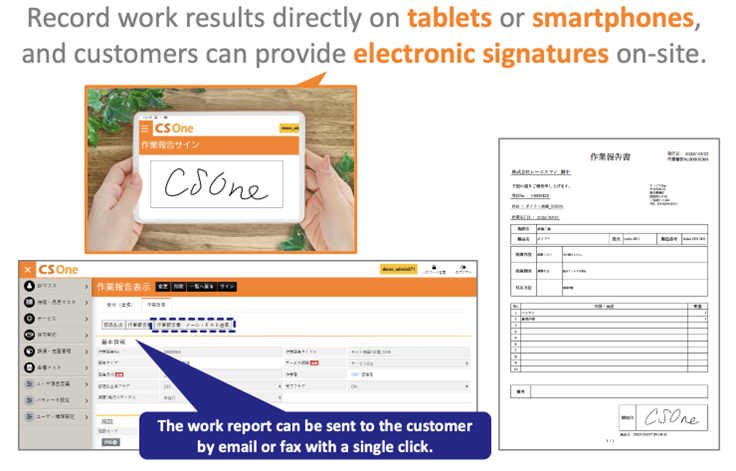
With CSOne, technicians use smartphones or tablets to submit real-time service reports directly from the field. Electronic signatures can also be collected on-site. All data is stored in the cloud and instantly shared with managers and customers. Managers gain full visibility into job progress and can respond immediately to delays or issues.
Technicians can record inspection details, checklists, and work results on-site, enabling instant report generation. Electronic signatures also provide immediate proof of service completion, reducing disputes.
This real-time visibility promotes operational standardization and prevents dependency on individual workers. As a result, both customer satisfaction and operational efficiency improve simultaneously.
Challenge 2: Poor Management of Customer Information and Service History
Accurate customer information, equipment data, and service history are essential to delivering consistent field service. However, when information is scattered across local PCs, paper documents, or various standalone tools, technicians cannot access past data when needed. This leads to poor troubleshooting accuracy and inconsistent service quality.
If a technician relies solely on personal experience, issues arise when that employee is absent. This can cause redundant work, miscommunication, and even unnecessary service that results in extra labor cost or customer complaints. Similarly, onboarding new employees becomes difficult without accessible past records.
CSOne consolidates customer information, equipment data, service history, and attached documents into a centralized cloud platform. With a field-service-optimized interface, technicians and managers can instantly retrieve necessary information.
Service records are linked to each piece of customer equipment, making it easy to understand previous issues, prevent recurrences, and tailor services to each customer. Detailed logs also serve as valuable evidence during audits or complaint handling.
By managing information at the organizational level rather than relying on individuals, CSOne enables anyone to take over operations without disruption. Even if a technician resigns or takes extended leave, the team can continue operations smoothly based on historical data.
This strengthens service consistency, reproducibility, and organizational knowledge retention, significantly reducing dependency on individual technicians.
Challenge 3: Inefficient Scheduling Dependent on Individual Staff
When scheduling relies on paper or Excel, double bookings, missed appointments, and inefficient travel routes become frequent. This leads to reduced field productivity. For organizations with large job volumes or many technicians, scheduling alone can consume enormous amounts of time.
Our research shows that scheduling without a dedicated system can require 480 hours of labor per month (assuming 100 technicians and 2,000 jobs per month). Moreover, when customers request schedule changes, a manual and person-dependent process cannot adjust quickly.
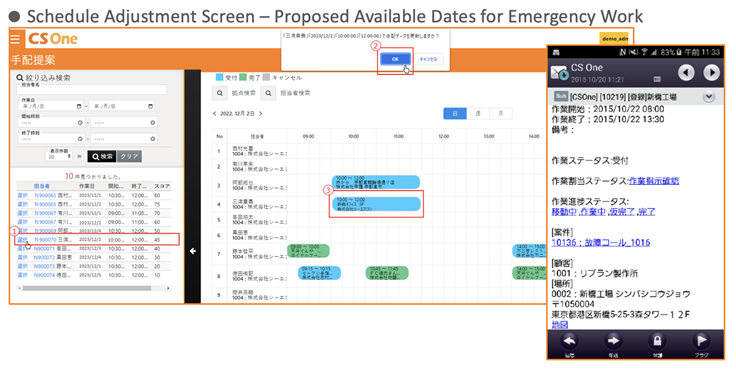
CSOne automatically proposes optimal technician assignments and schedules based on factors such as:
- Technician location
- Skill set
- Job urgency
- Previous and subsequent appointments
This dramatically reduces scheduling workload and technician travel time. Calendar-based visualization also simplifies schedule management and reduces burden on both managers and technicians.
Case Study: Life Home Co., Ltd.
Life Home Co., Ltd., a company involved in the sales, installation, and maintenance of residential equipment, previously relied on paper reports and Excel-based customer management. This resulted in inconsistent communication and delays.
After implementing CSOne:
- Service reports and customer data were centralized in the cloud
- Information retrieval became instant
- Scheduling processes improved dramatically
- Individual dependency was eliminated
The company successfully built a highly productive and repeatable operational structure.
Conclusion
Individual dependency in field service operations causes information gaps and inconsistent decision-making, weakening flexibility and productivity. Without shared progress data, scattered customer information, and standardized scheduling, even skilled technicians cannot deliver consistent organizational performance.
CSOne visualizes and standardizes the fundamental elements of field service—progress management, customer data, service history, and scheduling—dramatically reducing dependency on individuals. This ensures consistent performance, improves service quality, and boosts productivity. Centralized information also makes PDCA cycles easier to execute, accelerating sustainable organizational growth.
If you’re interested in learning how CSOne can enhance your operations, feel free to reach out. We will propose the optimal implementation plan based on your business and operational challenges.